
"Feels like home."
This phrase has been echoing through my thoughts more frequently lately, surfacing in the most unexpected moments. There are countless sights, smells, and textures that trigger this profound sense of belonging: ironically, none of which exist within the walls of my actual house. But among all these sensory anchors to "home," one stands out with particular clarity and emotional weight: the towering hydro structures that dot our landscape.
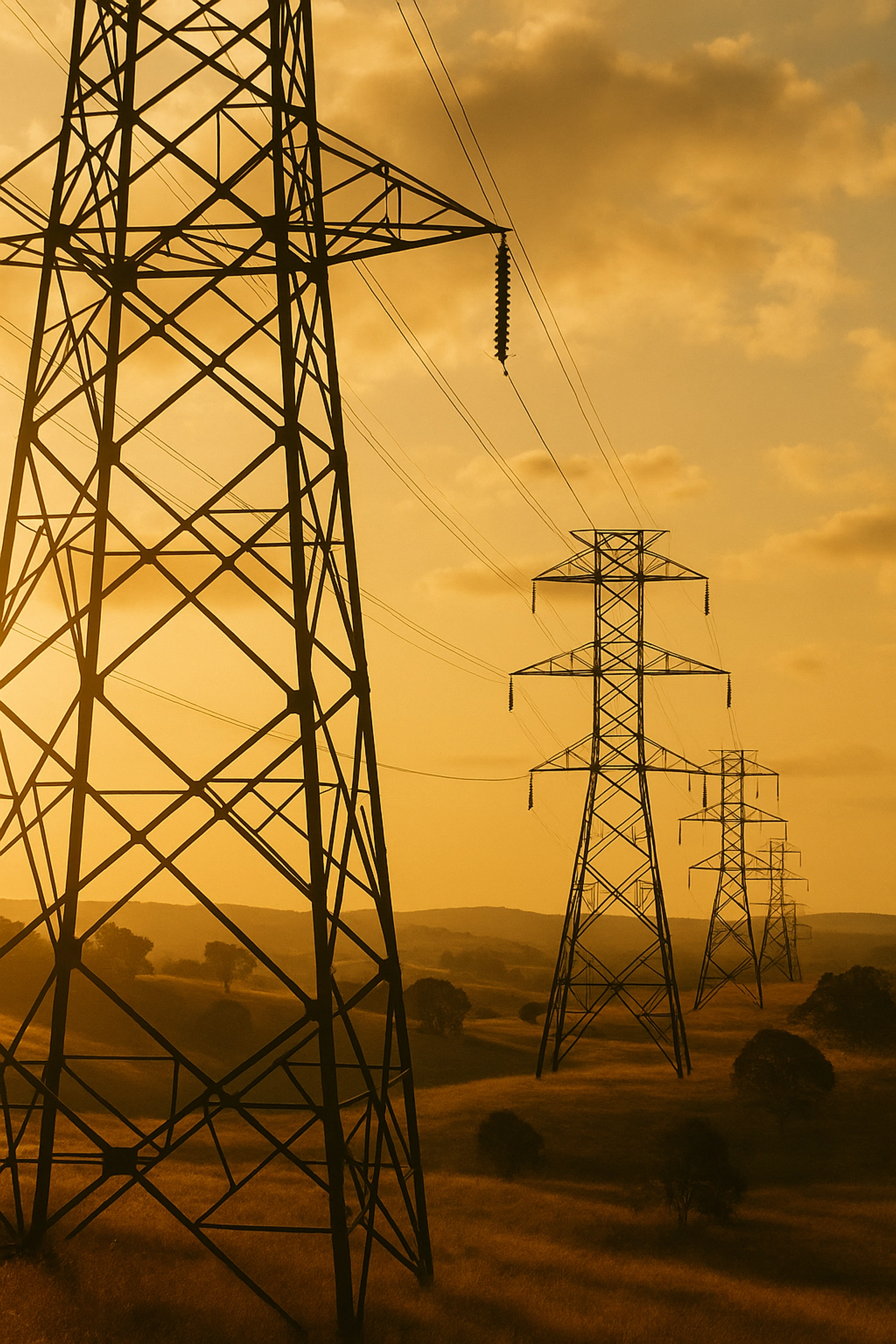 There's something profoundly moving about finding solace in industrial structures. These aren't the typical sources of emotional comfort we might expect: not a grandmother's quilt, a childhood bedroom, or a favorite family gathering place. Instead, it's the intersection of steel beams against sky, the geometric precision of engineering, the solid permanence of infrastructure that carries both power and memory.
The Power of a Five-Year-Old's Imagination
Every single time I catch sight of those imposing hydro towers while driving, I'm instantly transported back to childhood. I can still feel the texture of the car seat beneath me, still hear my mother's voice from the front seat as she pointed toward those steel giants and told me, "Your grandpa built those." [IMAGE_PLACEHOLDER: Hydro towers seen while driving - the view that triggers these powerful memories] My five-year-old self absorbed this information with the absolute certainty that only children possess. In my young mind, every single tower we passed became a monument to my grandfather's handiwork. I would crane my neck from the backseat, imagination running wild, picturing him scaling to the very top of each structure: hammer in hand, putting together the final pieces with the kind of solitary determination that seemed both heroic and entirely achievable. The image was always the same: Grandpa Holmes in his work overalls, cigarette dangling from the corner of his mouth, working alone against the sky. My childhood vision painted him as a one-man construction crew, single-handedly erecting these towering sentinels across our community. The reality, of course, was far more complex, involving teams of skilled workers, sophisticated equipment, and detailed engineering processes that my young mind couldn't begin to comprehend.The Adult Understanding vs. The Childhood Connection
Today, I understand the impossibility of my childhood assumptions. My grandfather probably didn't build every single tower dotting our region's landscape. In fact, he likely had direct involvement in constructing very few of them. His career at Hydro One encompassed far more than tower construction: encompassing maintenance, operations, and the countless technical aspects that keep our electrical infrastructure functioning seamlessly. But when my five-year-old self asked what Grandpa did for work, when I struggled to understand what it meant that he "worked for Hydro One," these towers became the perfect visual explanation. Perhaps we were simply driving past them when the question arose, making them the most convenient reference point for a complex career. Or maybe my mother, searching for a way to help her young daughter understand her grandfather's contribution to our community, chose the most visible symbol of his professional legacy. Whatever the reason, that connection took root and grew stronger with time rather than weaker with adult understanding.When Steel Becomes Embrace
The remarkable thing about these childhood associations is their persistence and evolution. Rather than fading as I gained a more sophisticated understanding of electrical infrastructure and construction processes, the emotional connection to these towers has deepened. Every sighting while driving brings an unexpected moment of comfort: a sensation I can only describe as feeling held.
There's something profoundly moving about finding solace in industrial structures. These aren't the typical sources of emotional comfort we might expect: not a grandmother's quilt, a childhood bedroom, or a favorite family gathering place. Instead, it's the intersection of steel beams against sky, the geometric precision of engineering, the solid permanence of infrastructure that carries both power and memory.